Mohair
Lightweight, luxurious, soft, flowing in elegantly luminous colours, this fine fibre with its very own charm takes centre stage.
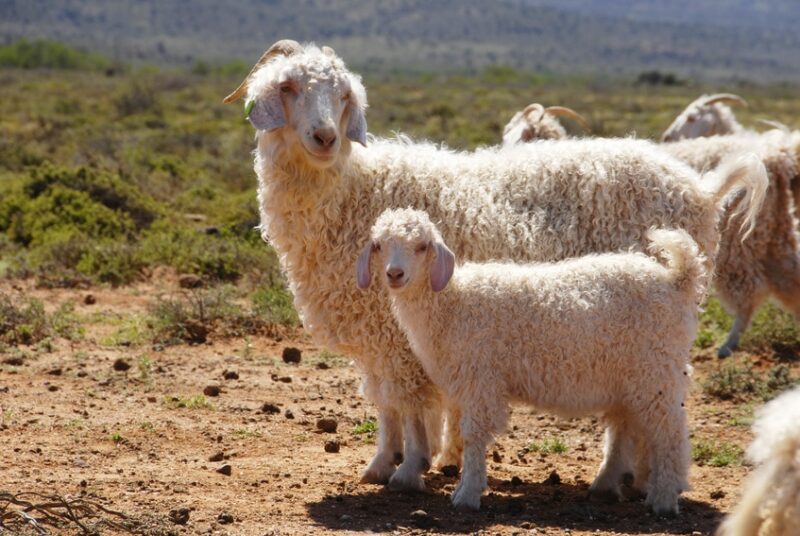
Mohair has a unique character and a subtle natural sheen. Mohair refers to the hair that comes from the Angora goat.
The hair of the Angora goat has a relatively smooth surface, which allows it to reflect light well and thus possess a noble natural lustre.
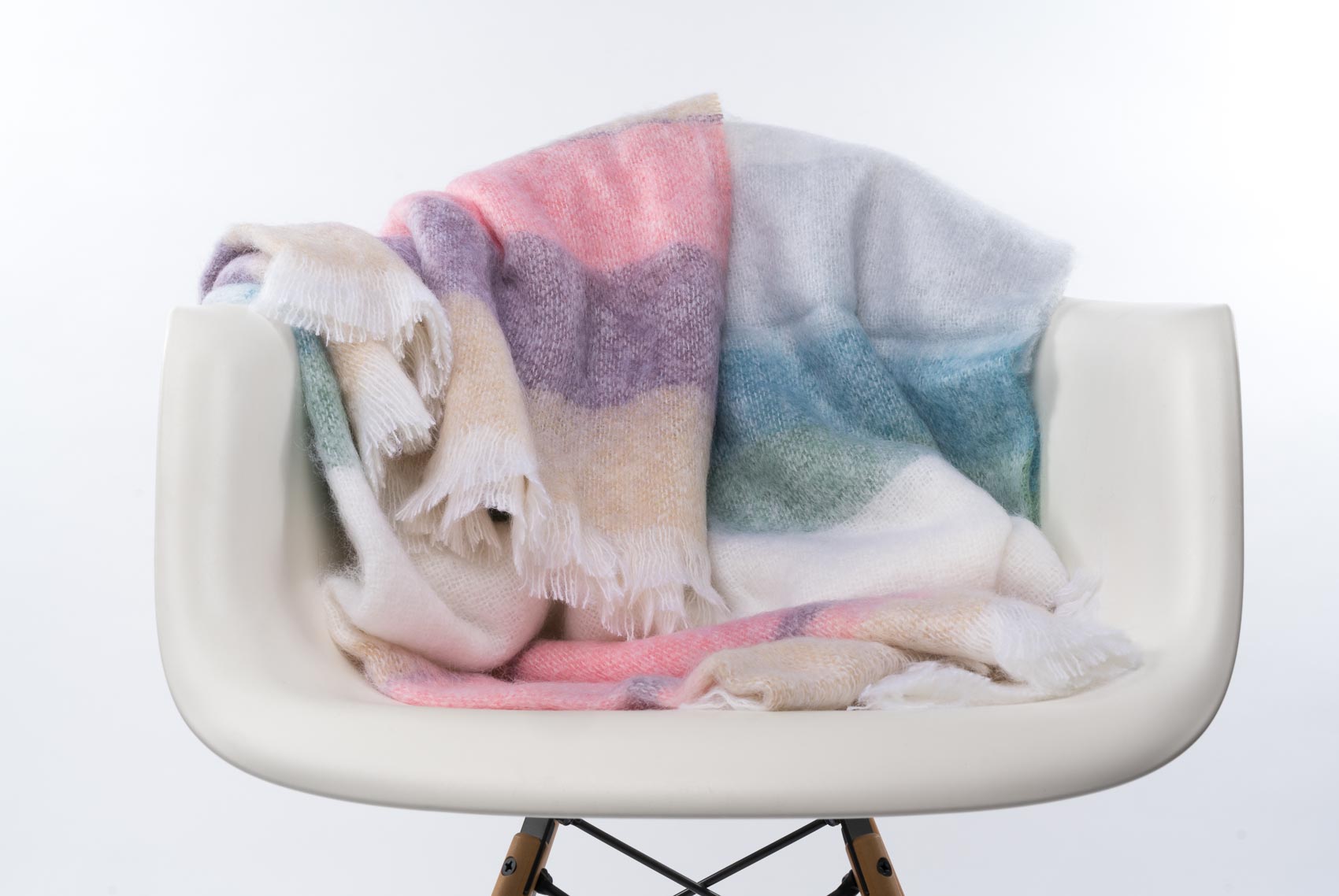
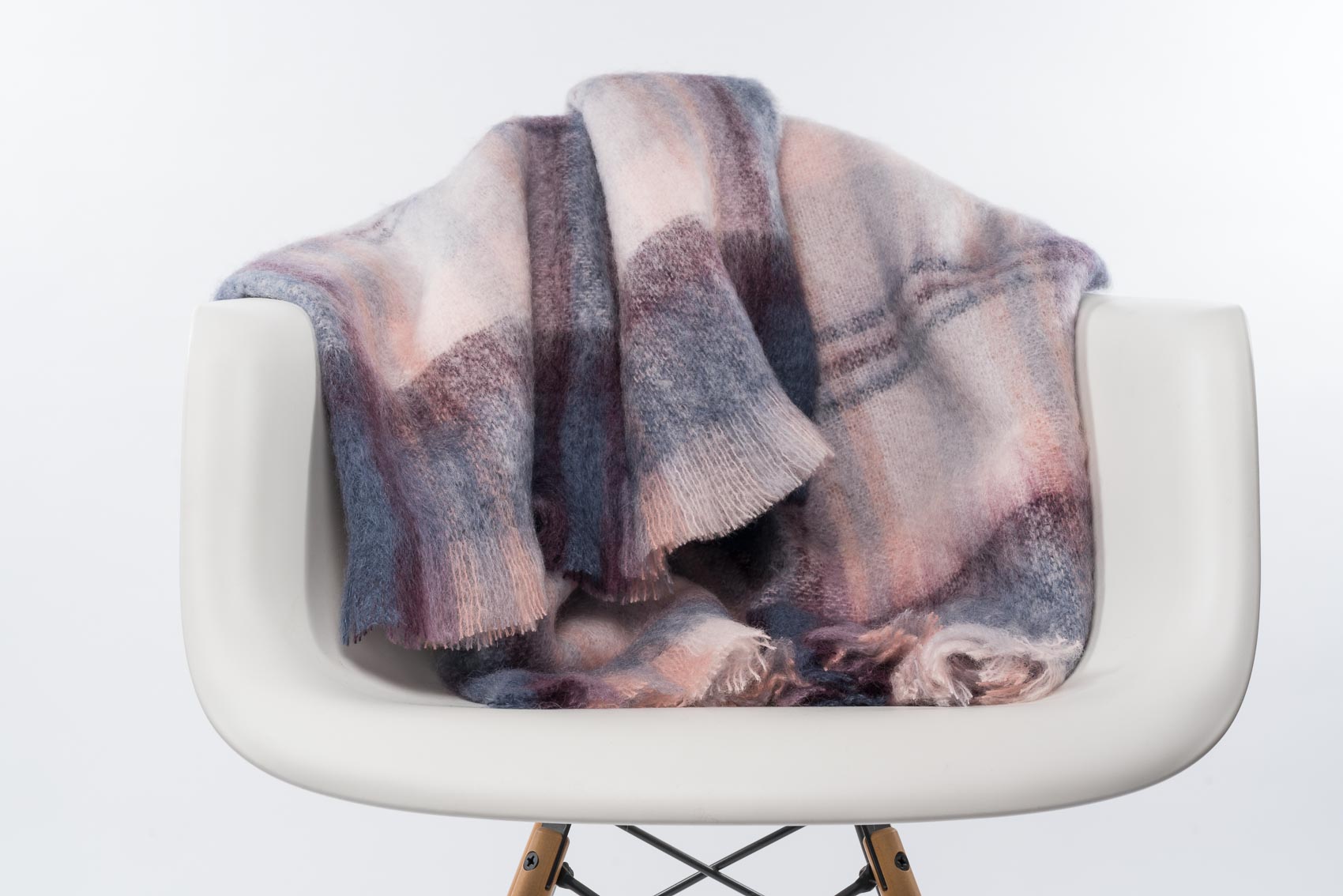
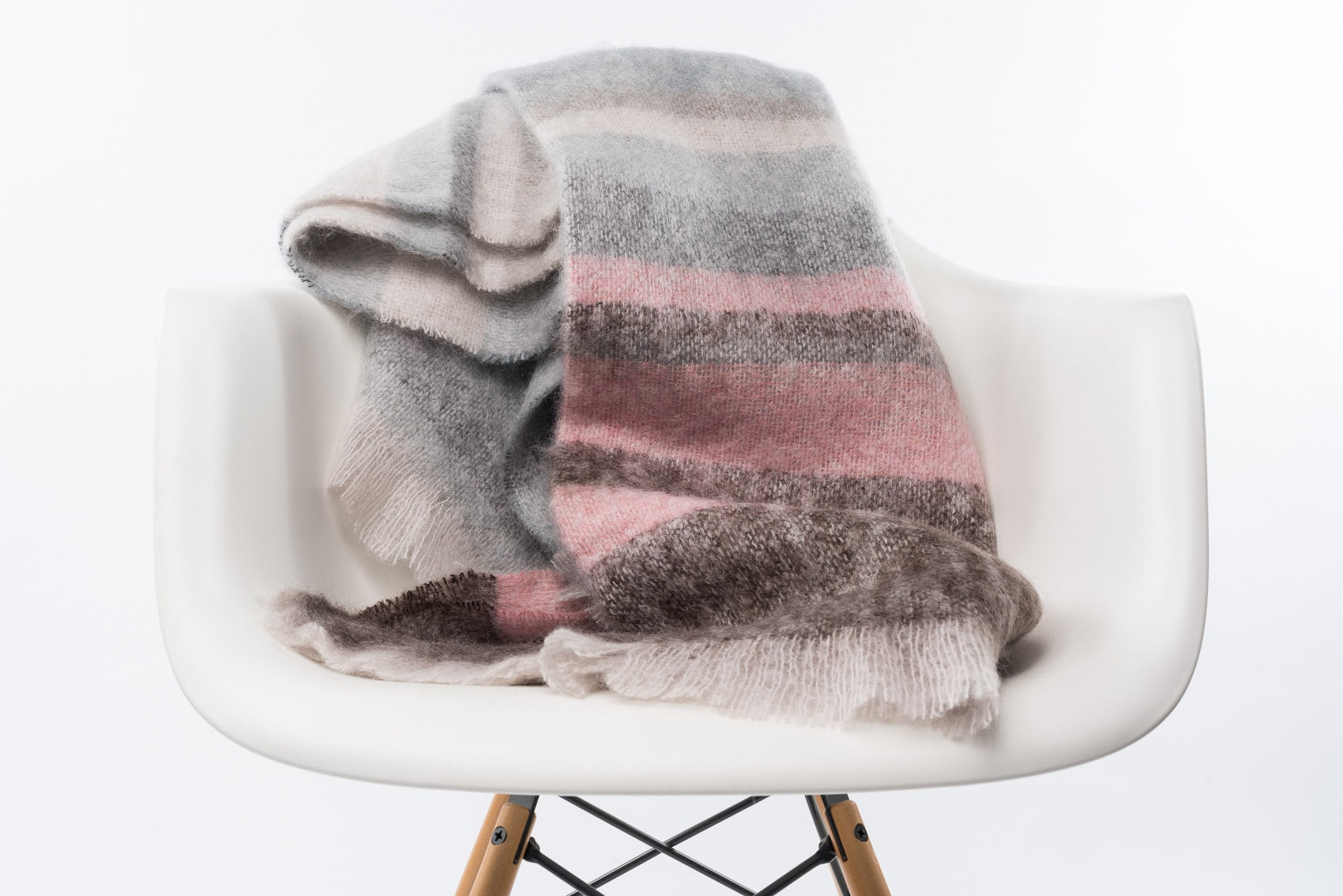
Currently, mohair seems to be growing in popularity, whether as hand-knitting yarn for sweaters, as a high-quality accessory, as a scarf, in the form of airy, light knitwear, or in the form of colourful plaids and blankets for the living area.
Worth Knowing
Brilliant Dyeing
Dyeing appears elegantly brilliant on mohair, which also makes it an attractive fashion item. The natural color is cream. Therefore, sorting is not done by color, but by fineness.
Fineness
The fineness of mohair ranges between 24-40 microns, depending on age and part of the fleece. The younger the animals, the finer the hair. The finer the mohair, the curlier it appears.
Light Luxury
Mohair has a lower specific density than wool and therefore feels light.
Mainly South Africa, the mohair goat thrives in the Mediterranean climate and is well adapted to it.
Prices approx. 20-40 Euros/kg, depending on fineness and finish, washed or as a combed top.
World production of mohair has been declining since the 80s/90s, and farmers suffered from the low raw material prices of mohair and sought other fields of activity.
The current higher demand for luxury natural hair with its specific characteristics, and the low supply on the other hand, are driving up prices and making the sale of mohair more attractive for farmers again.
Mohair Plush: The Durable Classic
High-quality mohair plush for seat covers, sofas, or dining chairs is world-renowned. Its durability, comfort, silk-like sheen, and physiological properties are unique. Particularly the somewhat coarser mohair scored here. Typically, even after 30 years, no visual wear or signs of abrasion are visible. Due to changing tastes over time, mohair plush has almost disappeared and has largely been replaced by polyester, wool, or blends.
The teddy bears by Richard Steiff are also world-renowned; he was the first to discover the exclusive material in the form of woven mohair faux fur for the classic in 1902.
History
Mohair producing countries, approx. 1990
South Africa 11,500 tons
Texas: 7,300 tons
Turkey: 3,000 tons
Argentina: 1,000 tons
Here are the current estimates from Stucken, as of March 2018
South Africa: 2,300 tons
Lesotho: 700 tons
Texas: 200 tons
Australia: 200 tons
Argentina: 300 tons
Turkey: 300 tons
Worldwide: 4,000-4,500 tons
10 years ago, South Africa produced approx. 3000-3200 tons
In the 1980s, South Africa and Texas alone each produced 10,000 tons
Prices
Mohair top 25/26 micron: 38.50 Euro/kg
Mohair top 28/29 micron: 33.50 Euro/kg
Mohair washed Kap Kid Mohair 25/7 micron: 25.50 Euro/kg
Mohair washed Kap Mohair 29/31 micron: 21.00 Euro/kg
………………………………………………………………………………………………………………………
Fineness
Kids (lambs) 24-29 micron
Young Goats 30-33 micron
Adults 34-40 micron
Length: South Africa and Texas 70-90 mm
Turkey 80-120 mm
Production per animal per year
South Africa and Texas: 3-4 kg
Turkey and Argentina: 1.5-2 kg
Mohair Throws