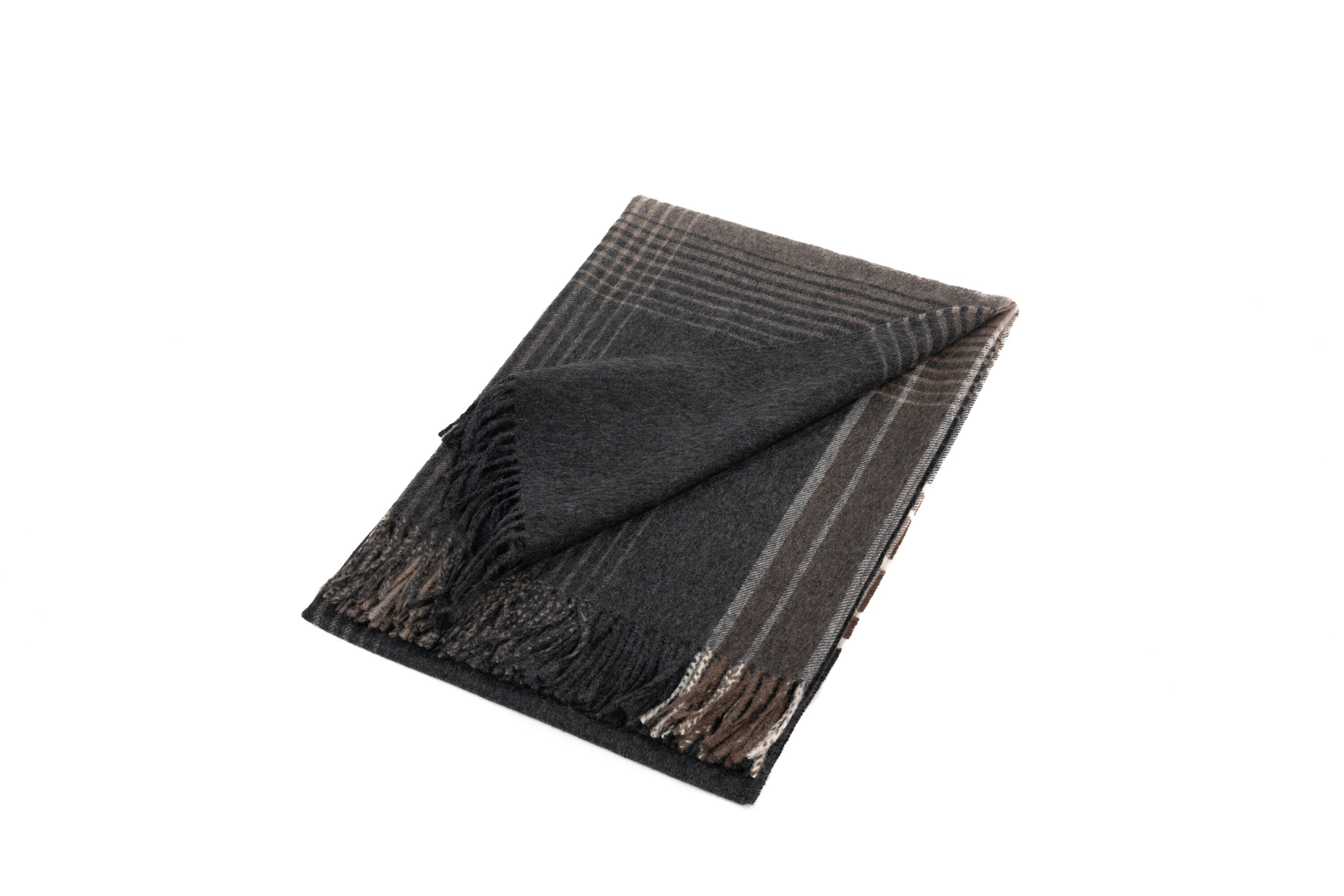
Manufacture & Production of Natural Hair Blankets
Our natural hair blankets are manufactured through all stages in Germany.

Raw Material Procurement
The raw materials are procured by the company owner himself. We purchase raw materials from established importers and long-standing partners from Switzerland, Germany, Italy, and England. The focus here is on the best quality. Procurement is carried out according to strict quality criteria regarding purity, color, fineness, length, provenance, and low vegetable matter content (straw, grass, plant impurities). We only purchase pre-washed wools and hairs.
Only a careful selection of raw materials provides the basis for successful further processing and good product properties.
Blend Composition
Blends are created by mixing different raw material components. This is done, for example, when a certain percentage of a raw material is desired, or when specific properties or complementary properties of different components are sought.
Typically, components are blended when certain properties of the individual components are intended to complement each other positively, to achieve better machine runnability, or to achieve better material properties than would be possible with a single component.
The blending price is also defined through appropriate manipulation and is included in the calculation along with other parameters. The spinning specifications, including the corresponding spinning parameters and the composition of the individual components, are provided by the company owner. This ensures consistent and reliable quality.
Natural Hair BlanketsSpinning the Yarns
Our yarns are spun in the new federal states of Germany in one of Europe's most modern woolen spinning mills. The spinning mill features new and modern machinery, as well as a white spinning facility for light yarns and separate spinning lines for darker yarns. Woolen yarns are fuller than worsted yarns, have a lower twist, and are easier to nap than worsted yarns if a voluminous surface is desired in the pile.
The twist values are individually adjusted to the raw material used. This ensures that napping can be done with minimal mechanical impact, avoiding unnecessary damage to the fabric.
Additionally, for our natural hair blankets, two fine yarns are twisted together in a ply with a specially soft twist, meaning they are joined with a defined twist. This results in a more even and stable yarn than a coarser, uneven single yarn.
The spinning parameters, such as twists per meter, yarn count to be spun, and twist for the ply, are defined by the company owner.
DuvetsThe Production
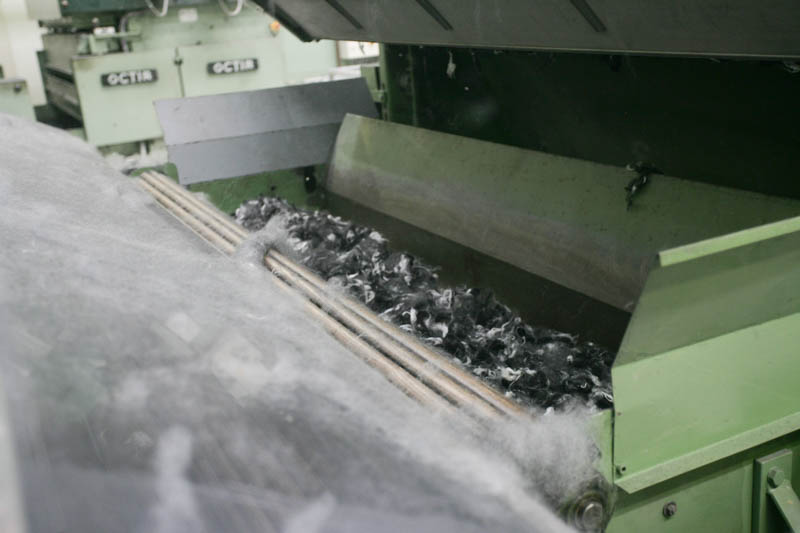
Box Feeder
Feeding wool into the carding machine
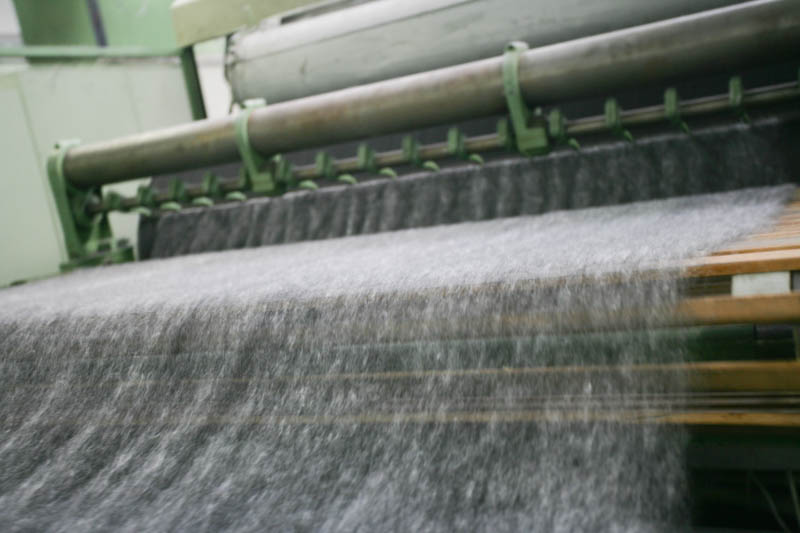
Fleece
Production of the fleece on the carding machine

Slivering
Dividing the fiber web into individual rovings
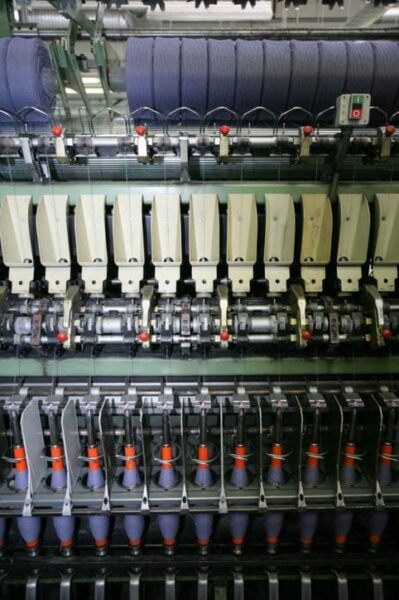
Spinning Machine
Spinning of the roving into yarn with a defined twist
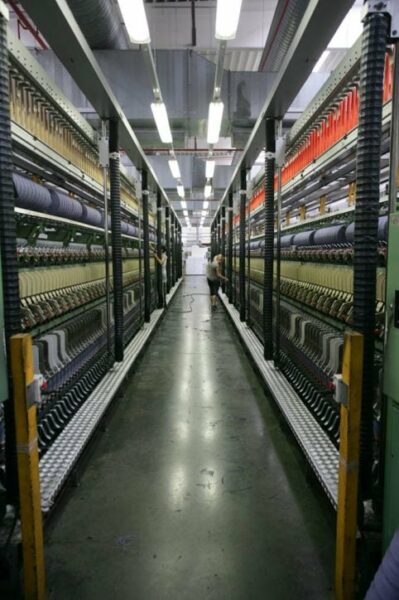
Spinning Machine
Production aisle
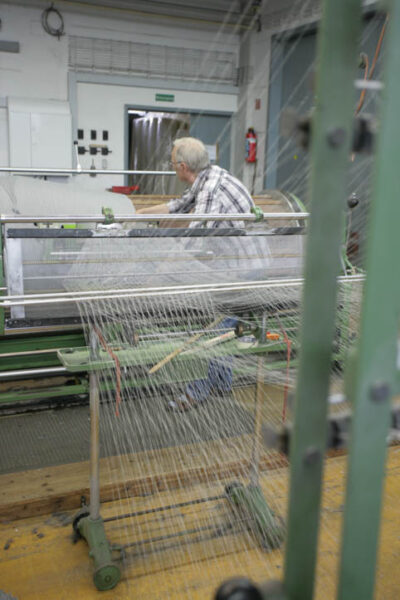
Chain Production
Longitudinal thread system
Weaving
Our blankets are woven in contract weaving mills in Upper Franconia.
Weaving generally refers to the intertwining of two thread systems. In our case, the warp in the longitudinal direction and the weft in the transverse direction. By selecting a suitable weave, the warp and weft are intertwined.
It is also possible to weave predominantly a light yarn on one side and a darker yarn on the reverse side by using a special blanket weave.
The corresponding weaving parameters such as reed width, division, warp and weft density, weaving length, warp yarn, and specification of which yarns are to be used, are defined by the company owner. Weaving lengths of 40-80 meters are usually woven.
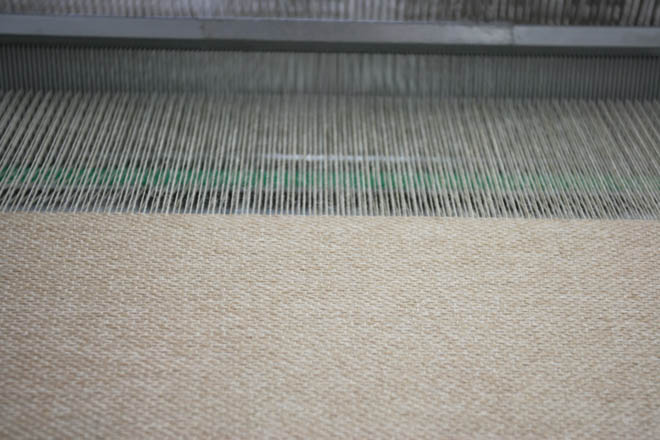
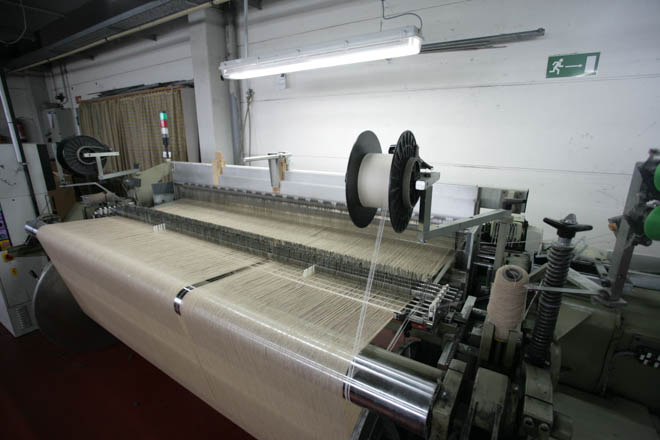
Weaving Machine
For natural hair blankets, we generally use a bulkier and rougher wool warp. This ensures that the weft, which is later washed and mechanically napped, is better "bound and anchored" than would be the case with a smooth yarn.
Weaving machine, in the foreground the Maharani cream fabric, in the background the warp with reed.
Mending and Washing
Mending:
The fabric is inspected for any weaving defects, knots, etc., and repaired by hand if necessary.
Washing:
Washing in special fulling washing machines removes spinning oils from the spinning mill and achieves compaction of the fabric in length and width. Depending on the material, this process can take between one hour and several hours.
The compaction of the fabric leads to defined felting up to a predefined degree (here, the natural felting properties, which are given by the scale structure and physical properties of the wool and hair, are utilized in a natural way).
Finishing
Finishing, also known as dressing, refers to the further processing of the fabric and the way it is mechanically and chemically treated.
By compacting the fabric in width and length, a higher resistance is achieved in the finishing and in the later use of the natural hair blankets.
The degree of the "felting process" also influences how the blanket will feel later. At the end of the washing process, the soap is washed out and the natural hair blanket is acidified with amino acid to approx. pH 5.5. At this value, the wool feels most comfortable.
The defined compaction is a prerequisite for successful further processing.
Napping
To create a napped surface on a flat woven fabric, the weft, which forms the pile, is usually mechanically napped. In the Middle Ages, for example, people would scratch the fabric by hand with metal cards until a sufficient pile or napped layer was created. In principle, this was a way of imitating or creating a better insulating or warming fur by hand. In this way, the pile layer could be created on one or both sides. In principle, nothing is done differently today. Napping is now, of course, carried out by machine with metal cards, roller cards made of teasels or metallic cards.
Napping refers to the mechanical processing using cards such as natural teasels, roller cards, their imitation such as metallic cards or metal cards.

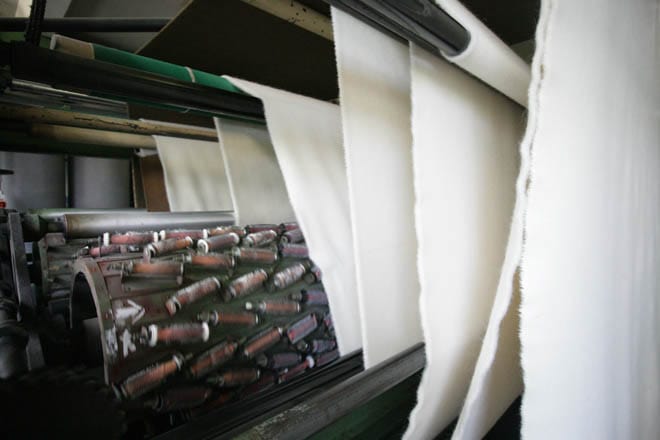
Walk Webmaschine
Loading the woven pieces.
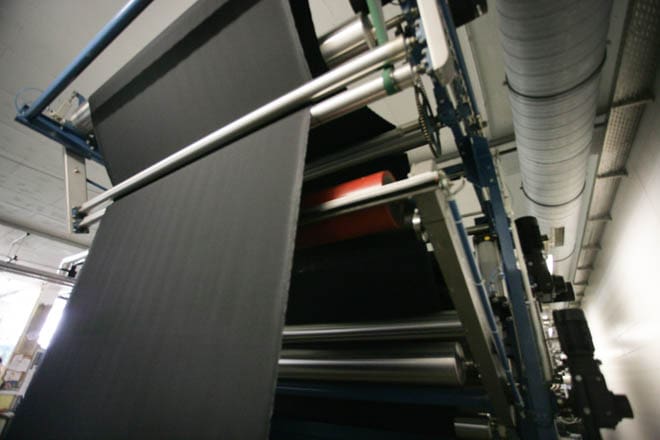
Smoothing
Open-width washing machine followed by smoothing of the fabric using two heated calender rollers.
To smooth out any creases in the fabric, the blankets are mechanically smoothed over a heated calender roller to ensure a uniform pile appearance afterwards.
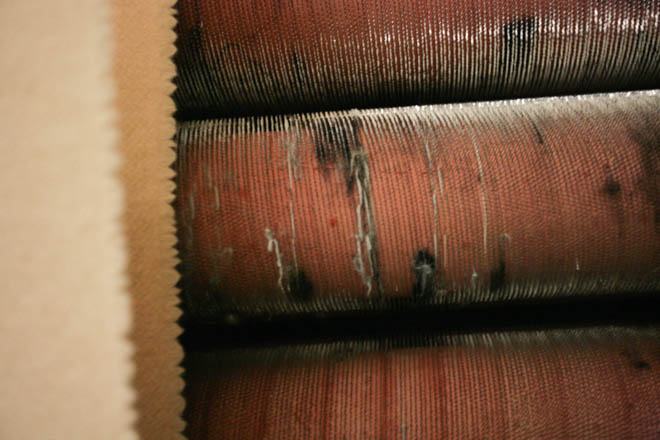
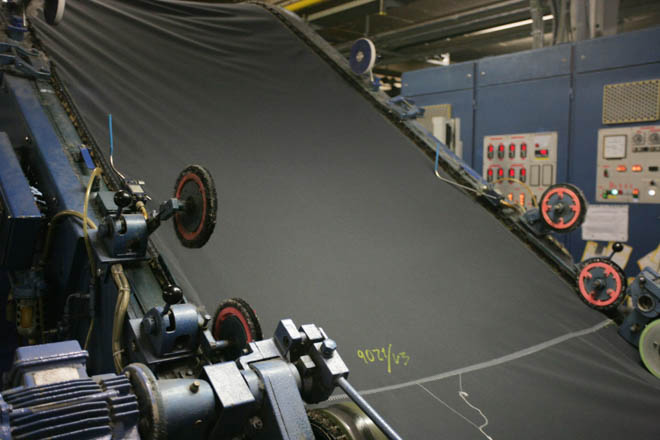
Napping Machine
with pile and counter-pile rollers for napping the wet fabric.
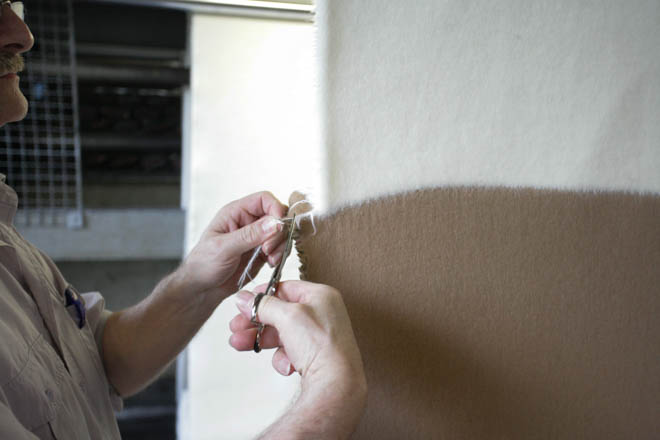
Craftsmanship
To achieve a better result, the process for Ritter blankets is repeated several times in different directions. Crucial factors are the machine's condition, the condition of the card clothing, the spacing between the card clothings, and a gentle machine setting.
Despite reproducible parameters through stored computer programs or parameter recall, the assessment of the napping success is done visually and haptically.
In napping, there are various napping machines that differ in the type of carding and functionality. Here, the machine park and experience determine how the napping is performed.
Drying Machine
To prevent matting or bacterial infestation, drying must take place after 2 days at the latest. This is usually done on gas-fired sheet or tray dryers.
Natural hairs like alpaca or camel hair are particularly sensitive to temperatures above 100° Celsius. Above this temperature limit, wools and hairs undergo a chemical change in their structure.
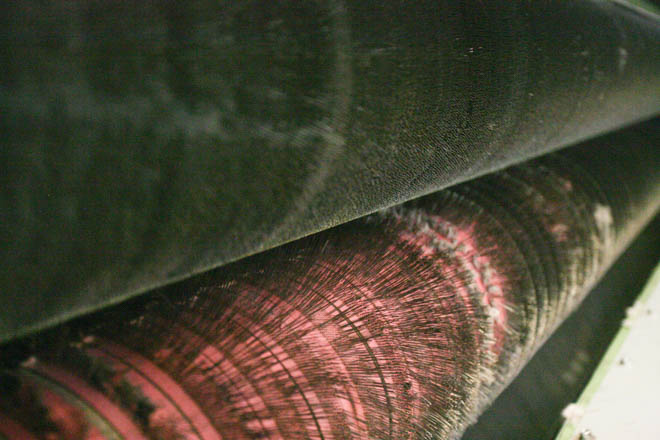
Teasing roller
Teasing roller with metal wires of the tabletop teasing machine. The lower roller shows the cleaning roller.
Camel hair in particular feels brittle if this natural limit is exceeded.
A gentle drying temperature of up to 100°C is therefore important. Our blankets are therefore not dried above this temperature.
Intermediate shearing
For gentle teasing from the base, the blankets must be intermediately shorn.
Teasing in dry condition
Teasing in dry condition is more aggressive than in damp condition. Here, the fibers are not only pulled out of the base, but also torn. The additional teasing process creates a particularly dense pile. The key here is moderate teasing energy to avoid unnecessary damage to the blanket.
Shearing
Intermediate Shearing
To enable gentle napping from the ground, the blankets must be intermediately shorn.
Napping in dry condition
Napping in dry condition is more aggressive than in damp condition. This not only pulls the fibers out of the ground but also tears them. The supplementary napping process creates a particularly dense pile. The key here is moderate napping energy to avoid unnecessarily damaging the blanket.
Shearing on a shearing machine cuts the pile to a defined pile height. Each side of Ritter blankets is shorn twice in different directions of travel to achieve a particularly even pile height.
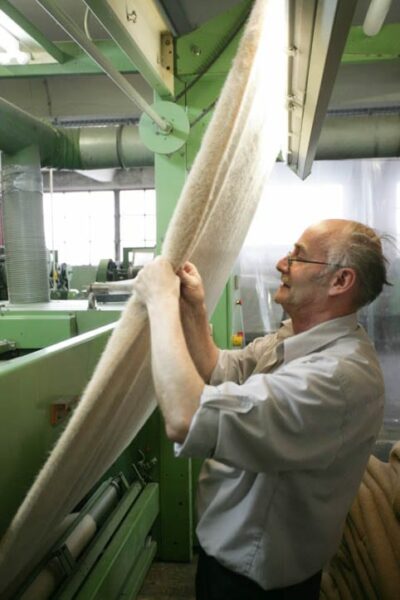
Table Shearing Machine
Checking the pile and the firmness.
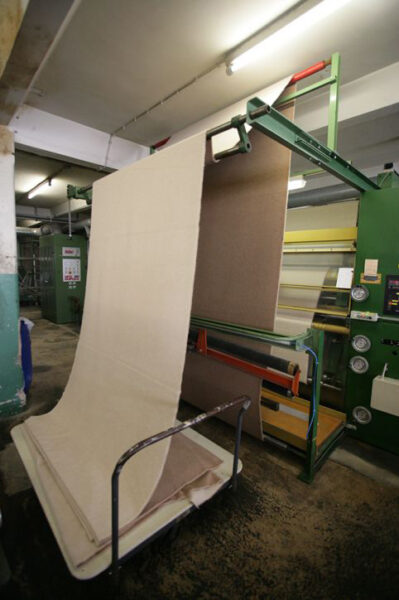
Shearing Machine
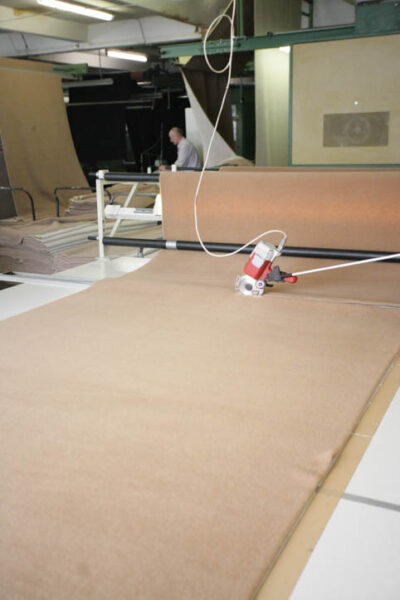
Cutting
The finished blankets are then cut to the desired lengths and sizes on the cutting table.
Edging and Labeling
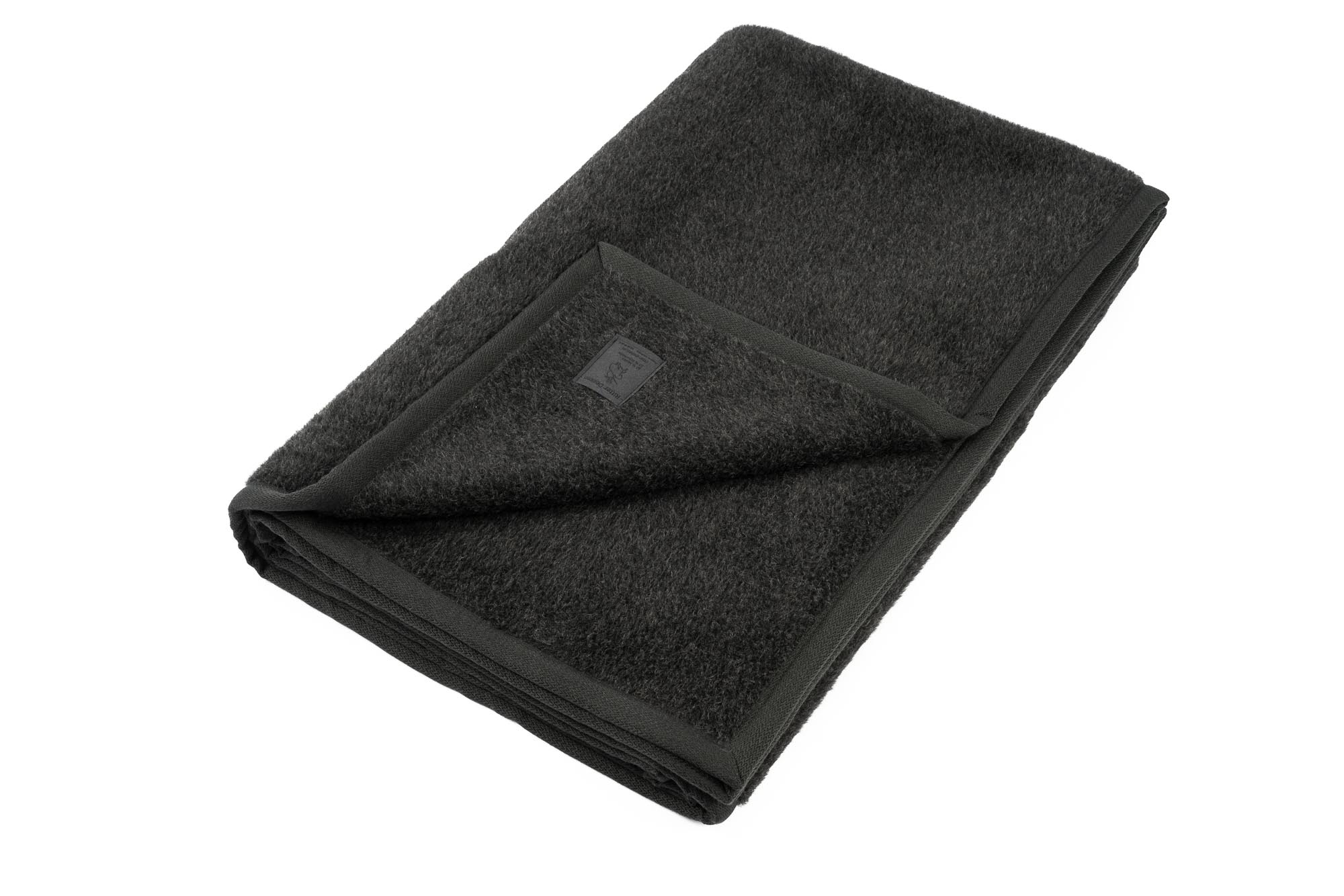
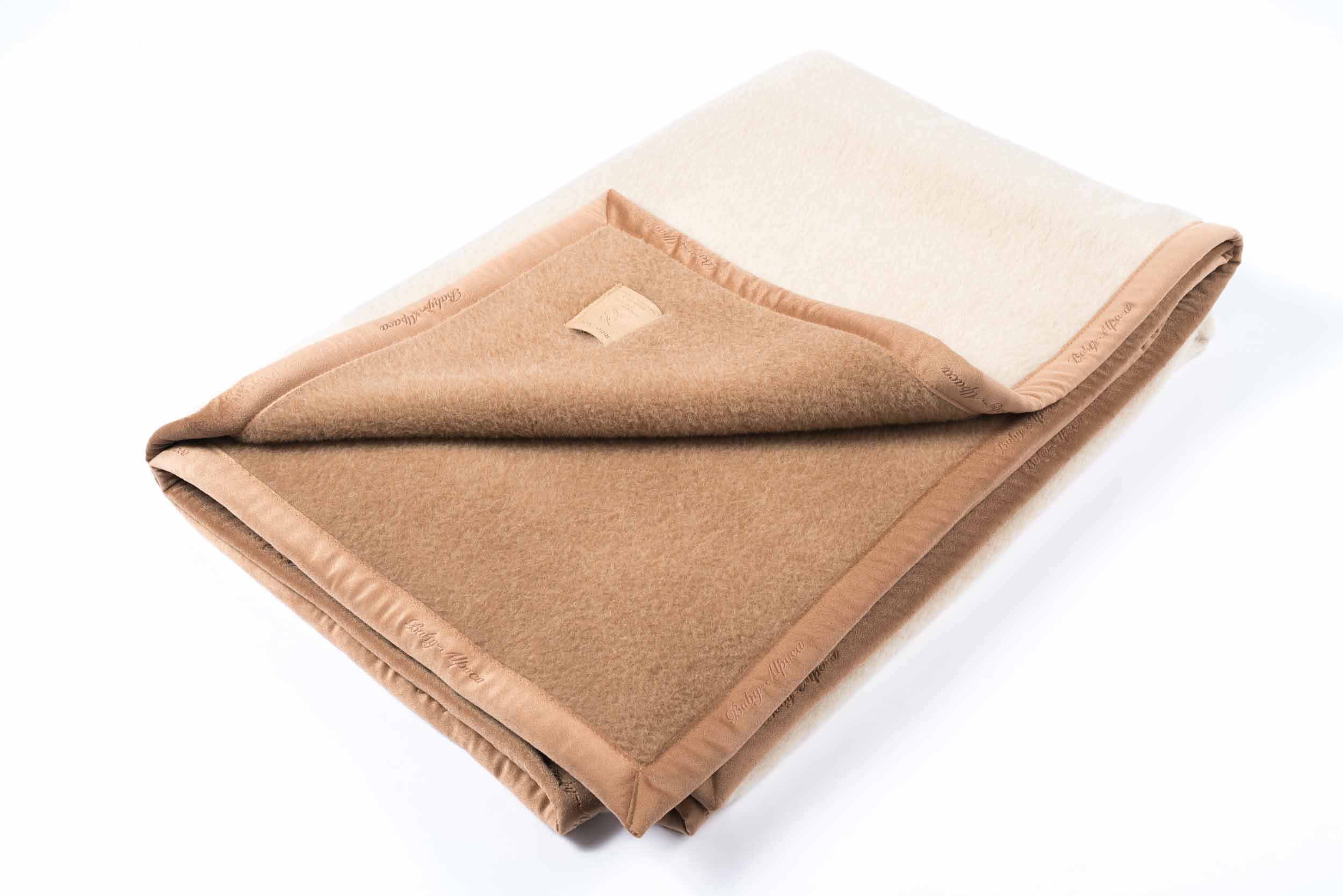
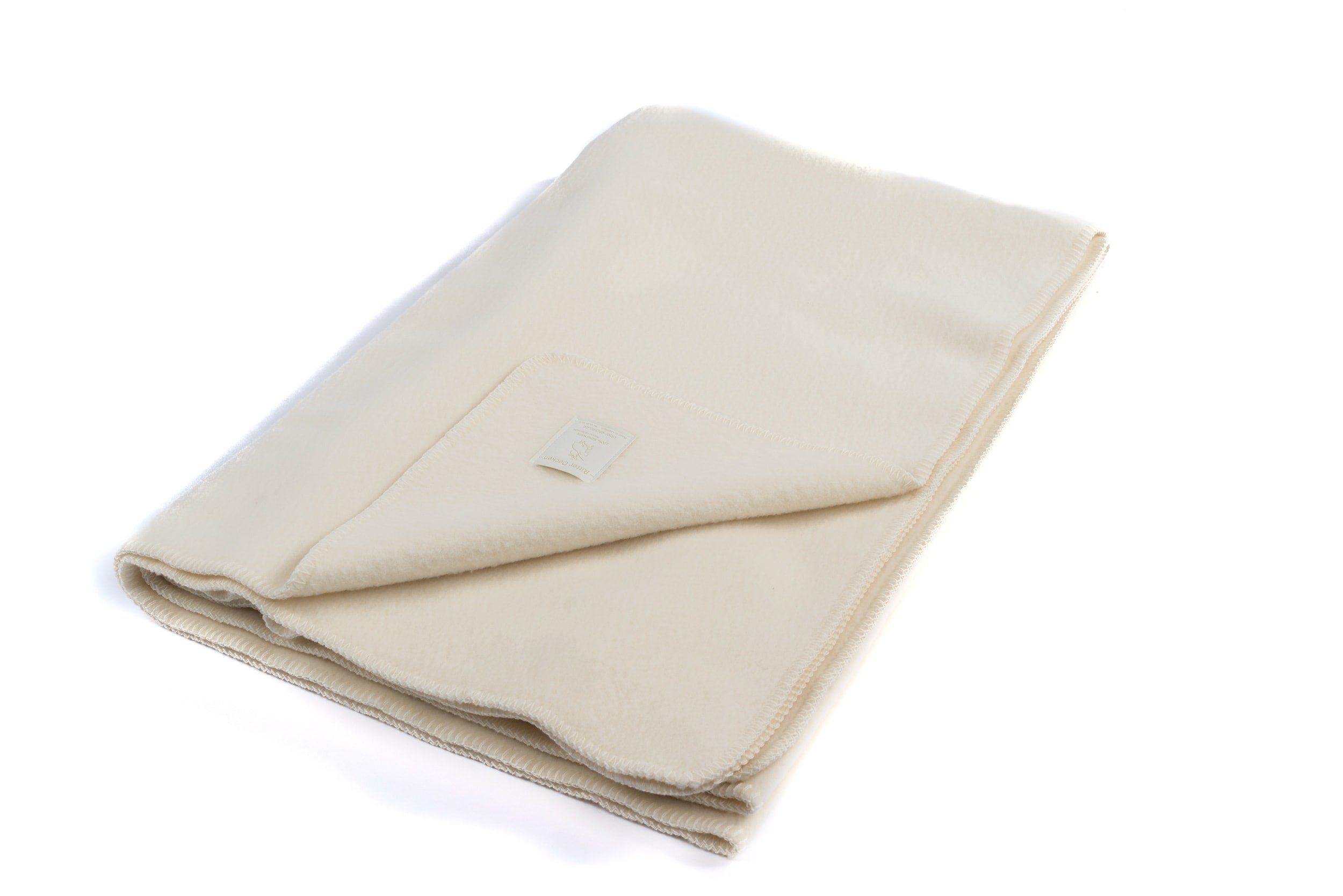
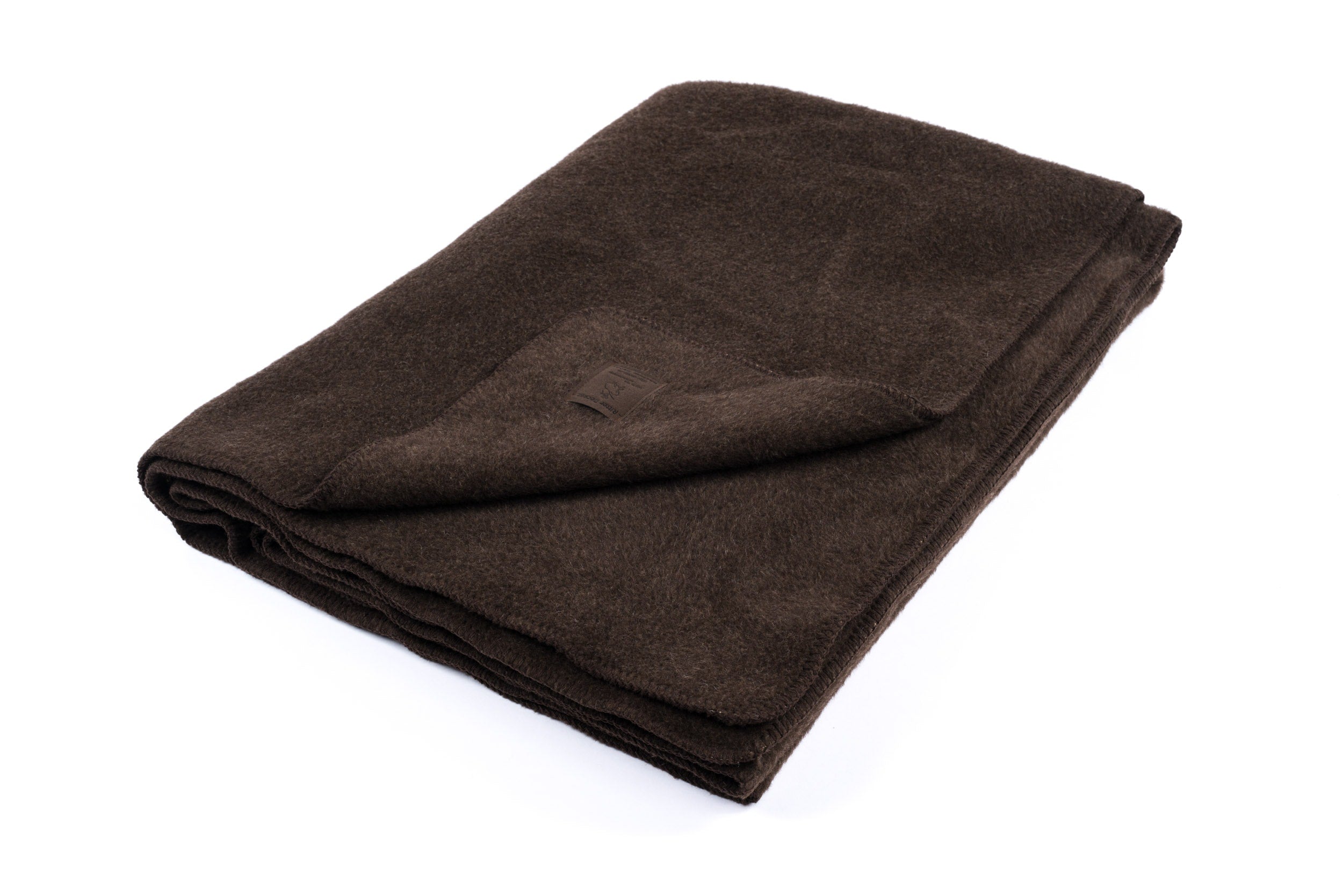
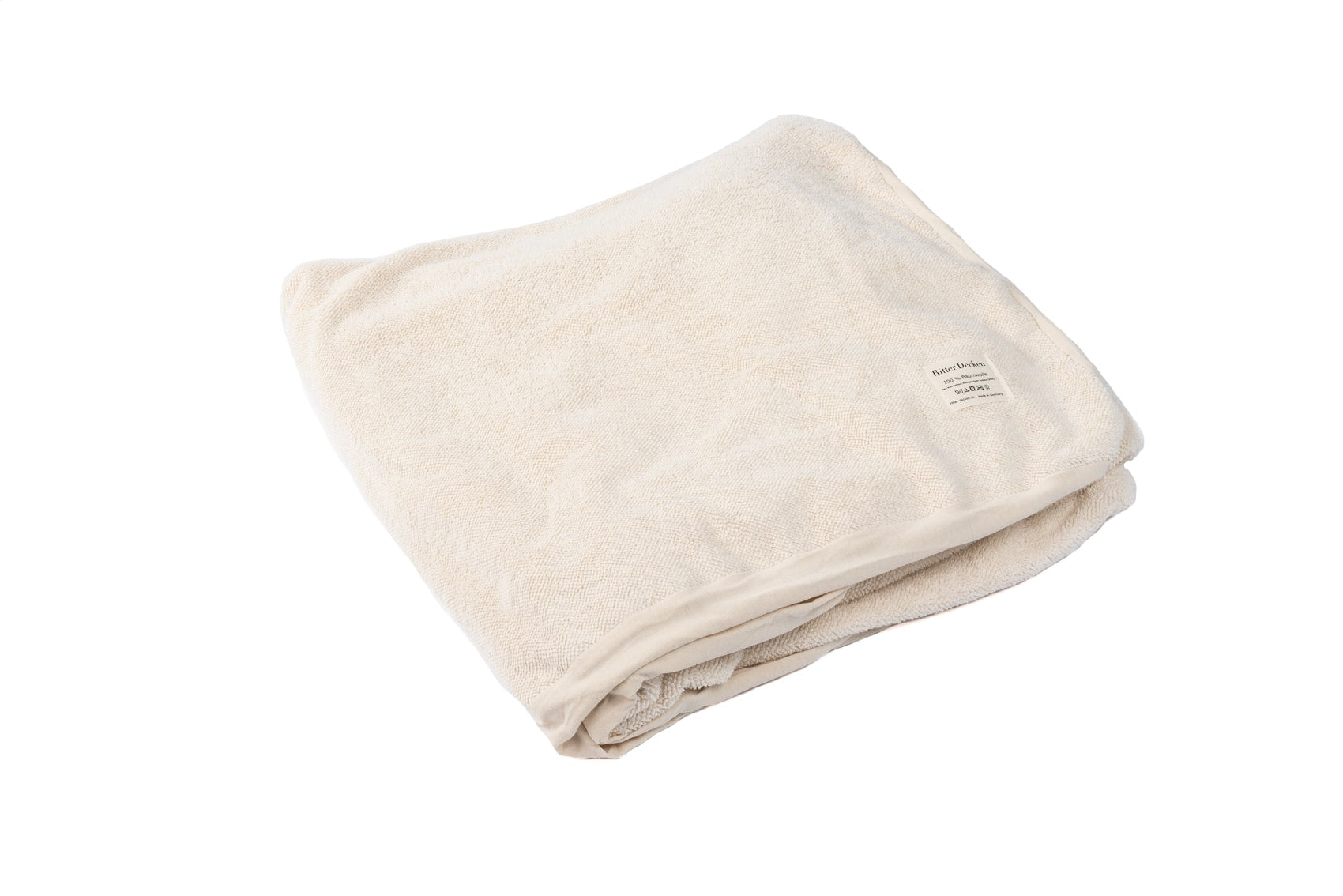
The blankets are edged with a desired binding tape or sewn on the outside with an ornamental blanket stitch.
The label contains information about the blend composition and the corresponding care symbols.